
From Hidden Experiments to Real-World Examples: How AI is Reshaping Construction Behind the Scenes
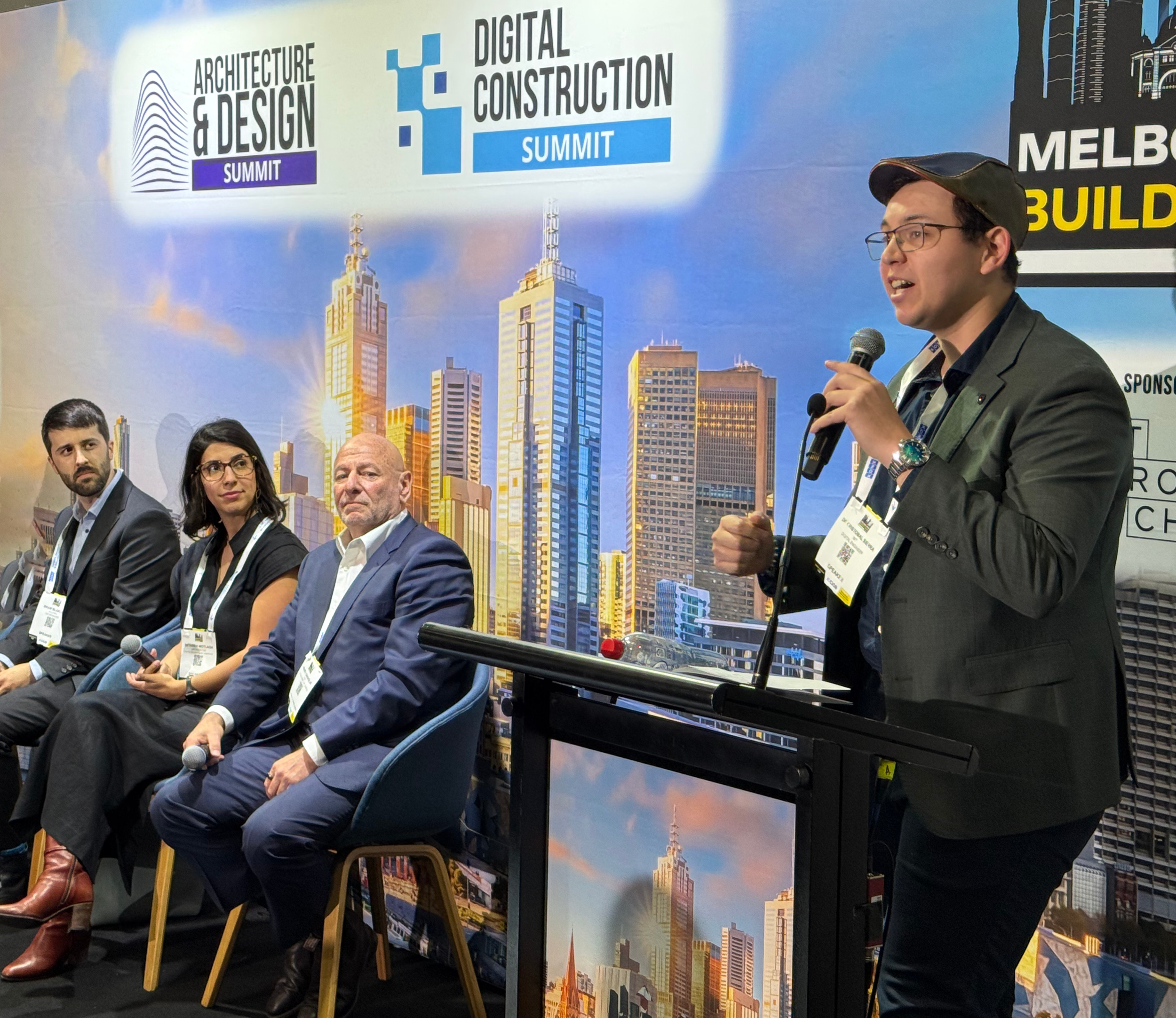
Digital engineer and data visualisation aficionado Cris Sierra from WT shares his insights from the Melbourne Build Expo’s Digital Twins + Data-Driven Construction and AI Integration panels
AI and automation are already transforming construction, but often in ways we can’t yet evaluate. A clear picture of the tools, systems and workflows being developed, adopted or quietly abandoned behind the scenes remains elusive. While organisations large and small experiment, invest and implement new solutions, confidentiality, competition, IP constraints and commercial pressures mean many of the most interesting and instructive discoveries stay hidden from view.
Recent discussions at the Melbourne Build Expo highlighted just how much industry insiders across architecture, engineering, construction and tech want that to change – despite the obstacles that stand in the way of knowledge sharing, transparency and collaboration. Instead, there’s a need for shared insights into both successes and failures to collectively build a more innovative, efficient and sustainable industry.
This was one of the big reasons the Data-Driven Construction & AI Integration session was such a drawcard at the Melbourne Build Expo. Panellists from Arup, Aurecon, Icon, Acciona and WT shared a refreshingly open discussion about how data, AI and automation are reshaping day-to-day workflows as well as bigger-picture business ambitions in the short and longer terms.
From Arup’s Serryn Eagleson revealing the work of intelligent robots inspecting tunnels at night (reducing human inspection time by around 70%) to WT’s Cris Sierra outlining a user-friendly internal data lake that serves to solve colleagues’ most common questions, participants were able to see AI shaping outcomes and projects in practice rather than theory.
Cris was the ideal expert to bring practical and technical insight to the discussion, given his knack for showcasing real-world uses of digital twins and automation in accessible and engaging ways.
As Cris explained in his Conversation article on drone-enabled road maintenance that can cut repair costs by up to 40%:
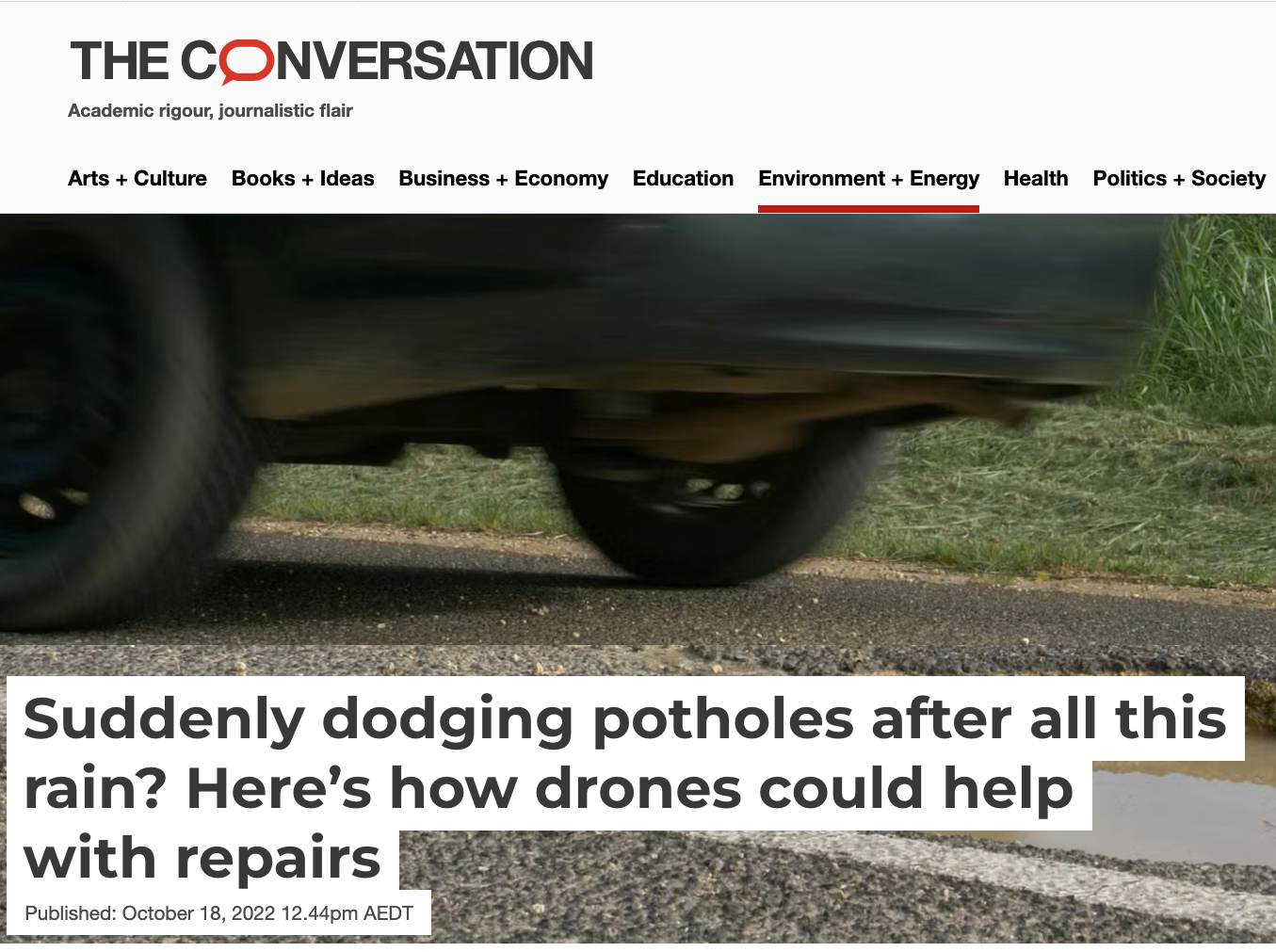
Here, Cris explains how drones capture images of roads and a digital model then accurately predicts which potholes are likely to widen into ‘wheel-destroying pits’ – leaving city planners and motorists much better off all round.
‘When people hear phrases such as drones, machine learning and digital twins, they can mentally file it under “interesting but too much work”. That’s a great shame. Using these tools is much easier now than it used to be – and industries from medical science to car manufacturing are taking them up.’
Cris’s work continues to demonstrate that shift in practice. Throughout the Expo, both on the AI panel and as Chair of the Digital Twins: The Future of City Planning and Construction session, Cris saw similar themes, questions and discussions emerging.
Summing up post-event, he put it this way:
‘The biggest highlight for me was the unity across all panels and conversations I had on the recognition that data is no longer a by-product, but a resource and increasingly a desired outcome in its own right.’
Here, Cris shares his key takeaways from the Expo and what might lie ahead for the industry.
From decades of fragmented knowledge to practical daily guidance
For Cris and his digital team at WT, there’s a singular starting point for any digital solution.
‘Put simply, it has to be actually usable,’ he says. ‘If it doesn’t solve a real, everyday problem, it’s not worth building.’
One of the problems his team kept coming back to, he explained, was one many consultancies know too well: decades of expertise spread across people, places and old project files that can be valuable, but extremely hard to access or navigate.
‘We’ve been around for 75 years, so that’s quite a long time,’ Cris says. ‘There’s a lot of data everywhere, and finding the right person that has the right answer has always been troublesome.’
‘Part of the challenge is that the information lives in different parts of the business. Teams who work in residential have deep residential data; infrastructure teams hold years of rail or road cost knowledge. It all exists. It’s just hard to combine in a way that lets people actually use it.’
The digital team set out to bring that scattered knowledge into one place by building a data lake capable of ingesting decades of cost information across project types, states and disciplines. The goal wasn’t a perfect archive, but rather to make the information easily accessible and usable.
On top of that foundation, they built a natural-language AI tool shaped around WT’s real internal questions — the quick ‘can someone tell me…?’ queries. ‘It started with a small search engine where you could ask simple things,’ Cris says. ‘Now it handles the kinds of queries we’d normally get from colleagues or clients. Crucially, the tool always shows its sources, and the team continually checks for hallucinations. It’s still in beta, but already paying off.’
‘It’s reduced the amount of emails we get on things like: ‘Who knows anything about fritted glass?’ or ‘what would this roughly cost?’. It might sound trivial, but it saves a lot of time.’
Other examples from the panel focused on solving recurring daily issues. Icon’s Dominic Martins described how his team developed a system that allows site workers to call in safety-form information by phone rather than looking down at an iPad on busy building sites — a simple change that reduces distraction and the risk of injury while capturing cleaner data.
These kinds of use cases highlighted the shared industry-wide agenda of making more diverse data increasingly usable in both onsite and office environments.
The sustainability paradox in the spotlight

‘We will use more AI, we will use more computer power, we will use more electricity — and we have to be more sustainable,’ Cris says. ‘Those are two facts that must live together.’
Sustainability was a central focus at the Expo. Construction teams are constantly under pressure to build better, faster and more efficiently using AI and automation. But at the same time, the data centres enabling that are set to consume vast amounts of water and energy – presenting a profound sustainability conundrum.
‘There are going to be two irreconcilable problems,’ Cris says. ‘We will use more AI, we will use more computer power, we will use more electricity — and we have to be more sustainable. Those are two facts that must live together.’
‘We know we love our computers, we love our electricity, and we will keep driving that. So yes, we will continue to consume resources to produce electricity and to run AI and data centres. But I think very naturally, we’ll find a way to do that in a more sustainable way.’
‘It might hurt a little bit at the start, but we’ll have to work it out.’
Data literacy: an increasingly essential skill for the future
A key question panel members were asked to address centred on the skills the future workforce will need as AI becomes more embedded in workflows. Cris offered the reassuring view that we don’t all need to become data scientists.
‘We don’t need to become experts in machine-learning or AI. But we do need to become more data-literate,’ he said. ‘Data is no longer a by-product of an activity. It’s an outcome — a desired outcome — that we’re capturing and using to structure insights.’
‘I'm barely old enough to have been told that I won't have a calculator with me at all times. I actually do but still, I have an expectation of my answer even if I’m using it. That’s how I like to treat these tools that we have with AI.’
‘You should have some sort of understanding of what you're getting out so you can recognise when AI hallucinates and doesn’t get it right. Having that last check is always going to be on us.’
‘We must be better at understanding where it gets information, why it responded as it did and why it makes mistakes so we can fix them. That sort of critical thinking, which is always going to be invaluable, is where we're going to see growth.’
Looking ahead: Information exchange and collaboration are key
‘In construction in general, we know it's really hard to talk about projects and specifics when you're not involved with them, because of IP reasons or trade secrets,’ Cris says. ‘I think one of the nice things about being at an event like the Build Expo is that we can try to open that up a little bit, and that’s really important.’
‘So what I saw was that perhaps the applications might have been slightly different. The projects, topics and sectors were different, but the overarching methodology doesn't really change too much in how we do work.’
‘It was reassuring to see and hear in these sessions and Q and As that we're not all trying to invent different wheels, but to create the same kind using similar tools. So while perhaps we can’t share the same data lake or same AI model, we are trying to achieve a relatively similar outcome with a relatively similar set of tools and toolkits.’
‘Ultimately what’s comforting is that you don't see a shining star or some weird unicorn that is doing everything differently or perfectly. We're all learning and the future remains uncertain. But then again nobody has ever been able to tell the future, that’s something we do know for certain.’
While that remains true, the audience left this particular session with a little more practical insight into what it might hold than they did before – which is definitely a step in the right direction.
Catch up with other experts from the Expo…
As a freelance writer/strategist, I share complex concepts, ideas and insights along with stories from the extraordinary people behind them.
If you’d like to work together, feel free to contact me.
