
Building the future: Waco Tao on AI, sustainability and the convincing case for prefab
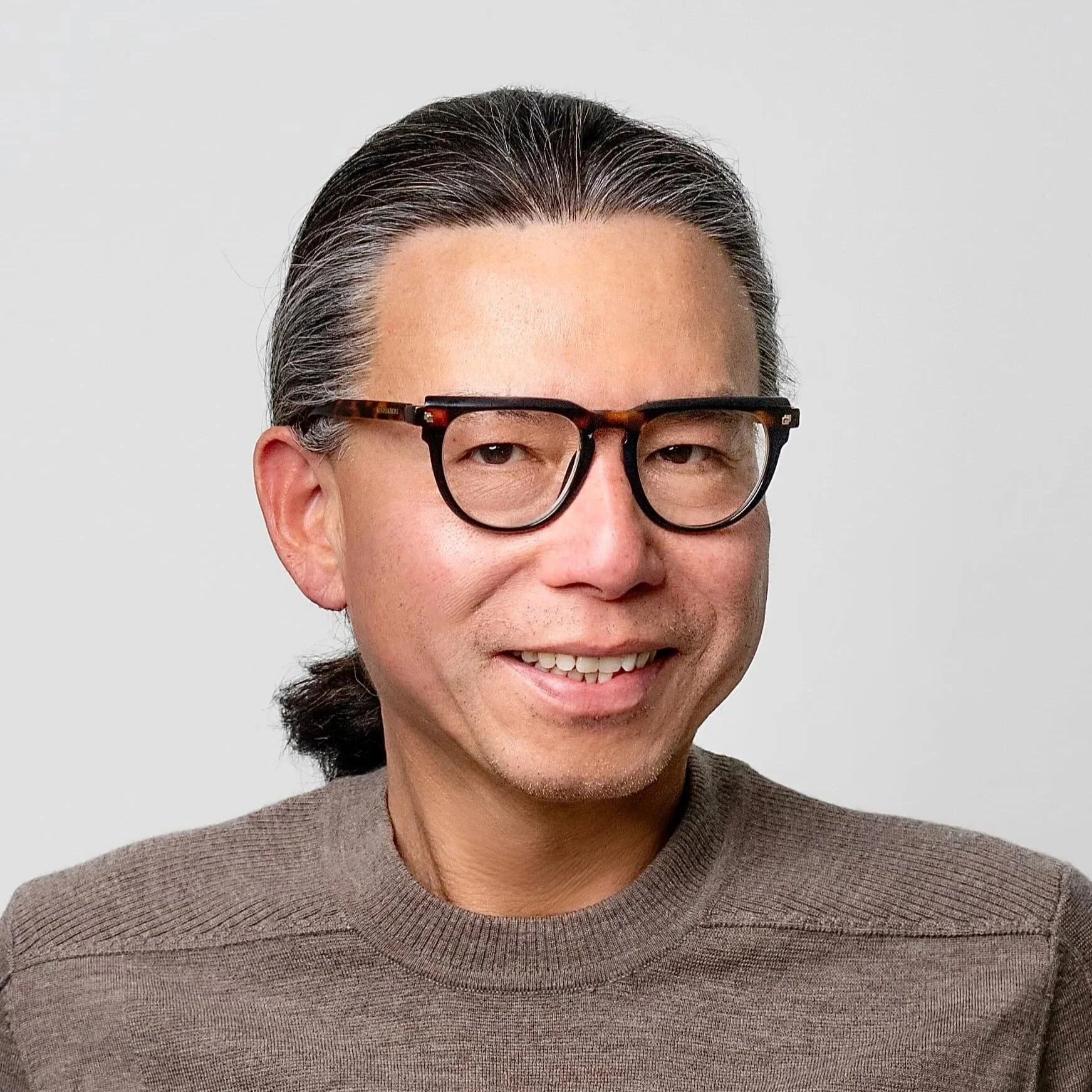
From the intricacies of handmade architectural models to the ambition of full-scale prefabricated homes made from shipping containers, Waco Tao 陶醉 has spent decades turning imagined structures into real ones.
Today, the high-profile founder of Prefab Council Australia, PowerHouse Homes and Models Inc has his sights set on solving Australia’s most intractable housing, affordability and sustainability challenges.
Here, Waco shares his practical and philosophical blueprint for combining AI, automation and the deeply human ‘wisdom of the hand’ to reshape how we design, build and deliver our shared future.
Clandestine parties and courtyard creativity: the origins of a lifelong maker
Waco Tao has always moved easily between worlds. From hospitality and marketing to model-making and manufacturing, to sustainable design and prefabricated housing.
‘It may all seem disparate,’ Waco says. ‘But there’s a clear through-line for me. It’s the simple, primal joy of taking raw, formless materials and turning them into something with purpose and beauty.’
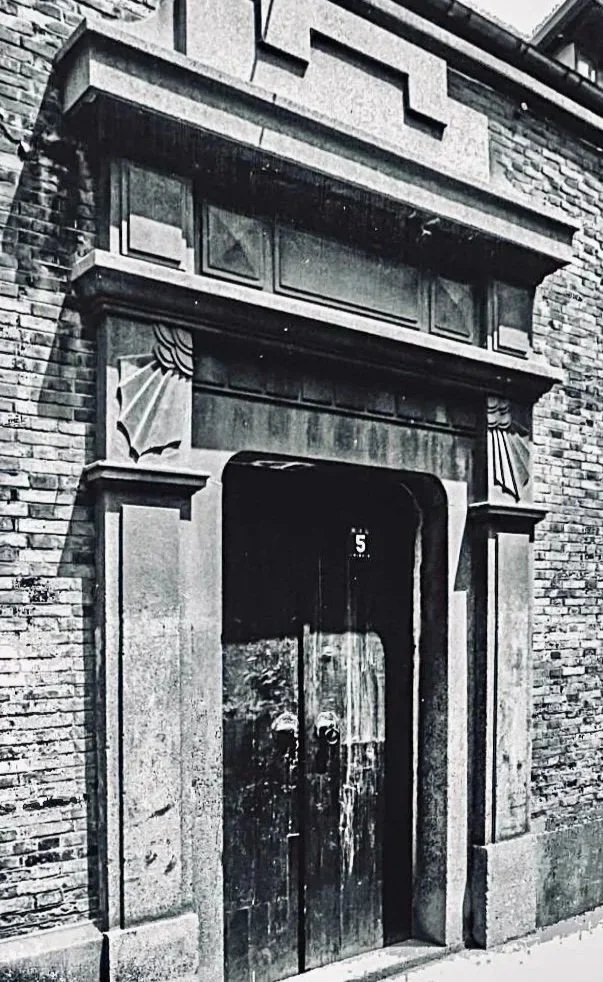
The entrance to the Tao family residence in 1960s Shanghai – home to secret soirees and Waco’s courtyard of endless creativity.
‘It all traces back to the courtyard of my family’s Shanghai home, where I’d spend hours and days teaching myself to make little boats, ships and planes.’
‘I had no master. My creativity exploded in that childhood heaven, as I cultivated patience, craftsmanship and a pair of surgeon’s hands. I still draw on those today, half a world away and half a century later.’
This early absorption in creative solitude was counterbalanced by his family’s vibrant social life. His father – ‘a kind of Chinese Fred Astaire’ as Waco describes him – hosted clandestine parties during the final days of the Cultural Revolution.
‘People would gather behind our high fence and big black door to enjoy Western music, art and culture that was still banned back then.’
Waco inherited his father’s sense of hospitality and style, and his mother’s genuine interest in helping others.
‘I was always really close to my mum and learned so much from her. One rainy day, she saw a woman struggling on the street and helped her deliver a baby. She was in the newspaper for doing that. It really says a lot about who she was.’
Leaving a flourishing career in hospitality in China, Waco moved to Australia in 1989 as an entrepreneurial 24-year-old. Not long after, he founded Models Inc – a one-of-a-kind studio that still produces meticulously crafted 3D architectural models for leading architects and developers today.
‘Models Inc was my university. It taught me that design without an understanding of materials is fantasy,’ he says.
You can draw a breathtakingly thin cantilever, but until you feel the weight of the balsa wood and the flex of the acrylic, you don't truly understand the forces at play. The model was the first and most honest critic of the design.’
‘That sensitivity, respect for the truth of materials and the relentless pursuit of precision is the bedrock of my work now.’
‘We may be using AI, robots and digital twins now instead of pencils, sketches and scalpels, but the principle is identical: the integrity of the final product is determined by the reverence for the process and the materials from the very first step.’
Can the wisdom of the hand survive the rise of AI?
As AI and automation reshape architecture, engineering and construction, Waco sees new tech tools combining with skills, lessons and philosophies dating back to a distinctly analogue age. Like many other contemporary designers, writers and artists, he is grappling with what we stand to lose and gain as design increasingly originates with AI, in place of the human sensibilities and sentience that have shaped them for centuries.

One of Waco’s handmade models - Richmond Square at 1 to 75 scale
‘There’s an intelligence that comes from the physical act of making,’ he says. ‘When you sketch, there’s a feedback loop between the mind, the eye and the hand that often leads to unexpected discoveries. When you craft a model, you learn through your fingertips.’
‘What we risk losing is the wisdom of the hand. But what we stand to gain is immense. AI can iterate through thousands of structural and environmental optimisations in seconds. That’s something a human could never do. So AI has this potential to free us to focus on the higher-order aspects of creativity: the poetry of a space, the cultural and emotional resonance of a form.’
‘The risk is if we abdicate our role as the master. We must treat these tools as the most brilliant apprentices we've ever had. They can handle the tedious calculations, generate routine details, and free us to focus on the overall vision and the most nuanced decisions.’
‘But we cannot forget how to draw, to sketch, to think critically without a machine’.
‘The challenge for our industry and our education systems is to train people not just to use AI, but to command it – to critique its outputs and imbue them with human wisdom and ethical consideration.’
Changing the soup and the ingredients: Prefab and the promise of sustainable housing
Waco’s interest in sustainability drew him toward prefabrication in the early 2000s. After decades of close collaboration with architects, builders and developers at Models Inc, he recognised industry-wide issues with waste, inefficiency, workforce and materials shortages and the inherent unpredictability of traditional construction. He became convinced there must be a better way.
‘My early ideas crystallised in 2007 as I sat on a plane circling above Sydney Airport,’ Waco explains. ‘I was reading about the housing crisis, when I looked down at all the idle shipping containers in Port Botany and thought: what if industrial waste could become part of the solution?’
‘If we used containers to build homes, we could achieve two things — clean up Mother Earth and provide a housing solution. Two birds with one stone. How beautiful is that?’
Within a year, he had researched global prefab models, founded PowerHouse Homes and built a series of prototype homes made from shipping containers. At the centre of each was a small courtyard, inspired by his childhood home. ‘From the kitchen, you could slide open the window and chat to guests in the courtyard, pass food through, be part of the conversation,’ he says. ‘That’s where life happens.’
Waco shipped one of his five prototypes from China to suburban Melbourne and opened it to the public. With a price tag of $160,000, it attracted thousands of visitors and positive national media attention – but ultimately proved to be an idea ahead of its time.

One of Waco’s first prototype prefab homes that opened for public display in 2010
‘Back then it was incredibly affordable, but nobody was ready to commit,’ he says. ‘People were curious, but they wouldn’t put their hand in their pocket. Neither policy or banks supported it. And we know in Australia, nothing moves in housing without the banks, whether you're a family building a home or a developer doing a project. And without that backing, it’s impossible to get something new off the ground.’
Looking back, he likens the experience to winemaking.
‘A good wine takes time to mature,’ he says. ‘Even vinegar takes time. My own time just hadn’t arrived yet, but I didn’t give up.’
‘Throughout this process I’d confirmed that prefab does move building from a chaotic, weather-dependent craft to a precise factory-based science. It’s the fundamental enabling methodology for solving our housing and sustainability crisis. It is a master key, but not the only one. You can’t achieve the scale, speed, quality and environmental performance we need with our current broken model of stick-building on site.’
‘Prefab is the necessary element needed for success, but as I learned from my experience and experiments, to achieve that success it must be paired with policy reform and financial innovation.’
The obstacle is the way: prefab’s ultimate challenge
Like many early innovators, Waco discovered that the biggest obstacles on his prefab path weren’t technical but systemic: misaligned financing models, inconsistent regulation, fragmented supply chains and persistent misconceptions that prefab was a byword for cheap or low quality housing.
These challenges weren't unique to Australia. Globally, the highest profile prefab unicorn Katerra collapsed after burning through $2 billion in just six years.
‘To change the ingredients, we need to be humbler and more focused than Katerra were. We don't try to boil the ocean. We create a closed, product-based system where we control the design, manufacturing and the assembly methodology, delivering a standardised, repeatable product that can be efficiently deployed across a variety of sites and conditions.’
‘We need to recognise that broader systemic problems can’t be addressed by technology alone, no matter how advanced it is. Here in Australia, the financial models used to fund housing and construction are still archaic and misaligned with the realities and benefits of prefab. Real transformation depends on synchronising technology, policy and finance.’
‘Ultimately prefab is the engine, but without policy paving the highway and finance providing the fuel, the engine just sits in the garage. All three are needed to complete the journey.’
Looking ahead: A blue ocean blueprint for a more sustainable future
For Waco, solving Australia’s housing and sustainability challenges demands practical finance and policy reform coupled with a profound philosophical shift.
‘We need to look to ‘Blue Ocean’ strategy, which is about creating new market space and making the competition irrelevant,’ he says.
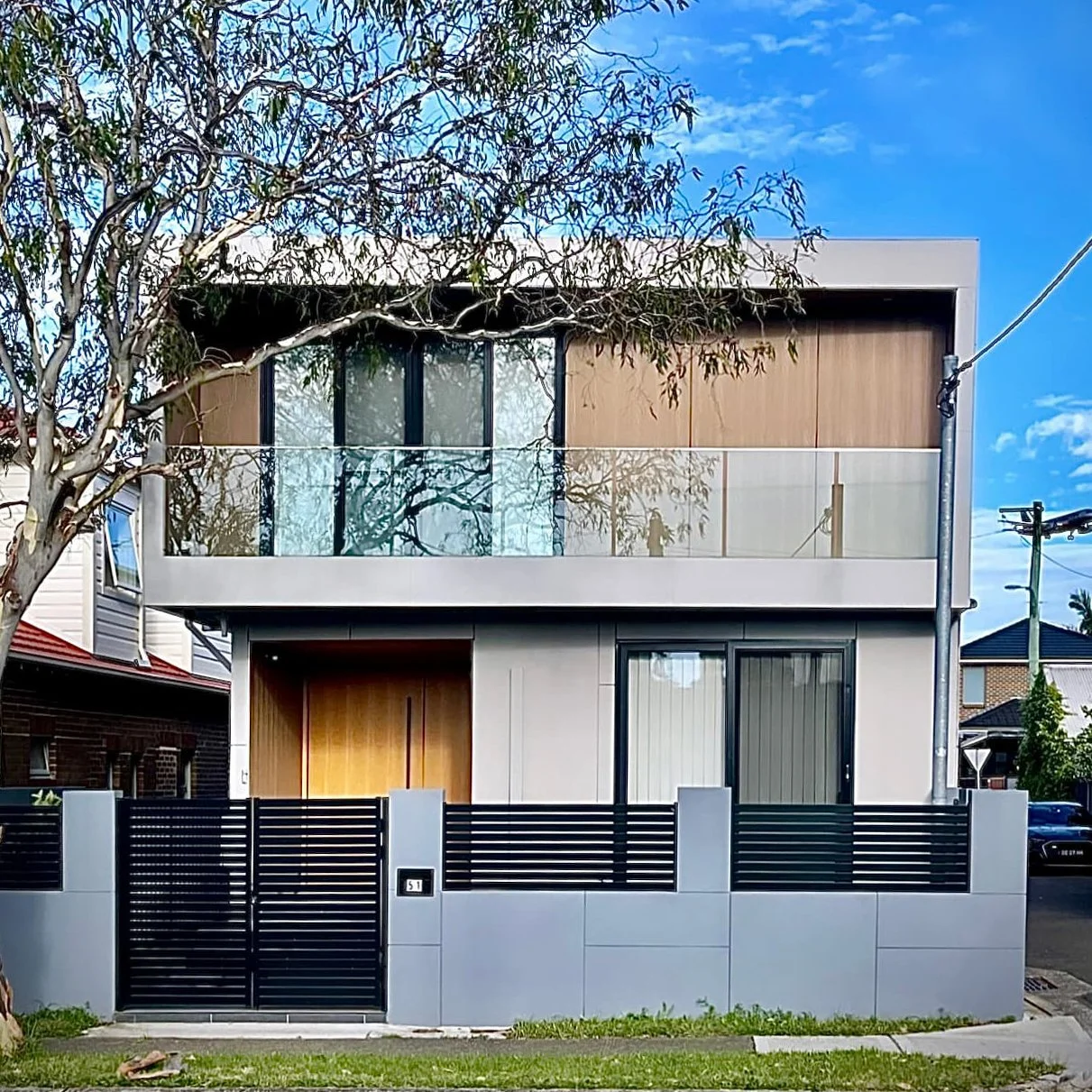
A PowerHouse modular home in Sydney, 2022
‘In prefab, the red ocean is the traditional construction battleground: competing on tender price, cutting corners, and racing to the bottom. The blue ocean we’re trying to create isn’t about building a slightly cheaper or faster house. It’s about redefining the value proposition entirely: unparalleled quality control, radical reduction in waste, certainty of schedule, and superior energy performance for the life of the home.’
‘I am a pragmatic optimist,’ Waco says. ‘The problems are immense, but the direction of travel is clear. The current system is collapsing under its own weight, and that creates the space for something new to emerge.’
‘My timeframe is not months, but nor is it decades. I believe we will see prefab move from the fringe to the mainstream over the next five to ten years. We are already seeing it with the entry of major players and the shifting conversation in government.’
‘Ultimately the future is not something we enter; it’s something we create,’ Waco concludes, tracing a thread back through his personal and professional travels.
‘For me, the act of creation has always been and will be the constant. Whether in design, hospitality, marketing, global trade, manufacturing, model-making, architecture or building, it has never been just about the object itself. It’s always about the human experience it enables.’
‘In hospitality, you’re crafting an evening for a guest. In construction, you’re building a place for people to live their lives in comfort. And now, with prefab, we’re scaling that intention to meet and solve the most pressing challenges of our time.’
Climate change is clearly one of the most urgent of those challenges, yet progress towards sustainability in construction still seems something of a pipe dream. AI, Waco argues, will be one of our most powerful tools for reducing waste and optimising performance, allowing designers to model energy flows, minimise material use and develop more circular design paradigms that 'squeeze every joule of performance out of our homes'.
Yet the paradox is clear: the digital infrastructure that enables AI has an ever-increasing appetite for energy, with data centres emerging as one of the fastest-growing and most contentious sources of demand globally.
To frame this as a binary choice, Waco believes, is to misunderstand the opportunity. The solution is not to choose between AI and sustainability, but to integrate them.
'The AI that designs a more efficient building must itself be powered by a rapidly decarbonising grid,' he says. 'This is a massive catalyst for the renewable energy transition and for the accelerated development of more efficient computing. The data centre of the future must be seen not as a passive energy sink, but as an active, flexible partner in the energy grid — its workload even shaped by the availability of renewable power.’
'There’s no doubt this is a difficult and critical challenge, but it’s one I believe will drive the very innovation needed to solve it.'
This resistance to binary thinking and a continual search for balance is also reflected in Waco’s broader view of technology and its uses. While enthusiastically embracing tools that enable buildings to be visualised, scaled and explored digitally, his studio continues to build meticulous physical models by hand — not out of nostalgia, but because he sees them offering something computer-generated models don’t.
'You have e-books and audiobooks, don’t you?' he asks. 'So why do you still want real books? It’s the same idea. It’s the smell, the feel, the very nature of it. When people see a hand-made model, they react with wonder. I still see it, always. There’s this moment of ‘wow’.'
The evolution of the curiosity, imagination and artistic appreciation that first inspired Waco’s experiments in a small Shanghai courtyard is clear in this reflection — even if his tools of the trade now include AI, digital twins and holograms. In essence, it underscores what he believes we most need to protect as the AI revolution unfolds.
'AI can expand what’s possible,' Waco says. 'But if we don’t continue to cultivate the wisdom of the hand now, it’s very unlikely we’ll fully use our minds to realise what’s possible in the future.'
'It’s our shared responsibility to safeguard the ability to imagine and create independently – always.'
Further reading:
Waco’s policy and regulatory reform recommendations to pave the way for a prefab future
-
‘The current policy and regulatory environment in Australia were built for and continue to actively reinforce traditional site-based construction,’ Waco says.
‘Reform is about reshaping this landscape to be agnostic, or even preferential, to industrialised construction methods.’
Key recommendations for reform include:
1. Standardisation and national harmonisation:
‘We have a patchwork of state-based planning schemes and building codes. A factory producing homes for the entire national market shouldn't have to navigate dozens of slightly different, often contradictory, regulations. Policy reform would push for a national, performance-based code that focuses on outcomes (for example energy efficiency and structural resilience) rather than prescriptive methods (for example, how a wall must be assembled on-site).‘
‘This would allow a certified, factory-built component to be approved for use anywhere in the country.’
2. Streamlined approval processes:
‘The planning and permit system is notoriously slow and unpredictable. For a factory that thrives on certainty and workflow, a 12–18- month planning delay is a death sentence.’
‘Reform would create fast-tracked approval pathways for pre-certified, sustainable prefab designs. Think of it like State Environmental Planning Policies (SEPP) for code-compliant, green prefab homes, allowing them to bypass much of the bureaucratic quagmire.’
3. Modernised procurement:
‘Government is the largest client in the construction sector. Its procurement rules are almost exclusively based on the lowest initial tender price. This actively penalises prefab, which often has a higher upfront cost but delivers superior whole-of-life value.’
‘Reform would mandate Value-Based Procurement, where tenders are evaluated on a broader set of criteria: speed of delivery, lifecycle carbon emissions, waste reduction, and social value.‘
‘This would allow government to use its purchasing power to create a stable demand pipeline for prefab, de-risking the industry for private investors.’
-
‘The financial models used to fund housing and construction are archaic and misaligned with the realities and benefits of prefab,’ Waco says. ‘Innovation is needed to correctly value and de-risk the prefab proposition.’
Key areas for financial innovation include:
1. Valuation and lending models
‘Banks and valuers currently struggle with prefab,’ Waco explains.
‘They often undervalue prefab homes because their comparables are traditional site-built homes, and they perceive the factory-built model as riskier. Financial innovation involves creating new valuation models that accurately capture the "embedded value" of a prefab home: its certified quality, superior energy performance (which reduces future utility costs for the occupant), and durability. This would allow for more favourable lending terms.’
2. De-risking capital for factories
‘Setting up a modern prefab factory is incredibly capital-intensive. Traditional lenders see this as high-risk. We need new financial instruments, such as green bonds or specialised infrastructure funds, that are specifically geared towards funding the industrial base for sustainable construction. These investors would understand the long-term, stable returns of manufacturing assets, similar to how we fund renewable energy projects.’
3. Unlocking whole-of-life finance
‘The "first-cost" mentality is our biggest hurdle.Innovation here means creating financial products that monetise the long-term savings.
For example:
Sustainability-linked mortgages: where a homeowner gets a lower interest rate because the home's certified low energy use reduces their cost of living and the bank's risk of default.
Service-based models: Instead of just selling a house, a company could offer a ‘warmth-as-a-service’ or ‘shelter-as-a-service’ package, where the monthly payment covers the mortgage, energy, and maintenance, justified by the certainty of performance a prefab home provides.
Read more about prefab housing and automation in Europe
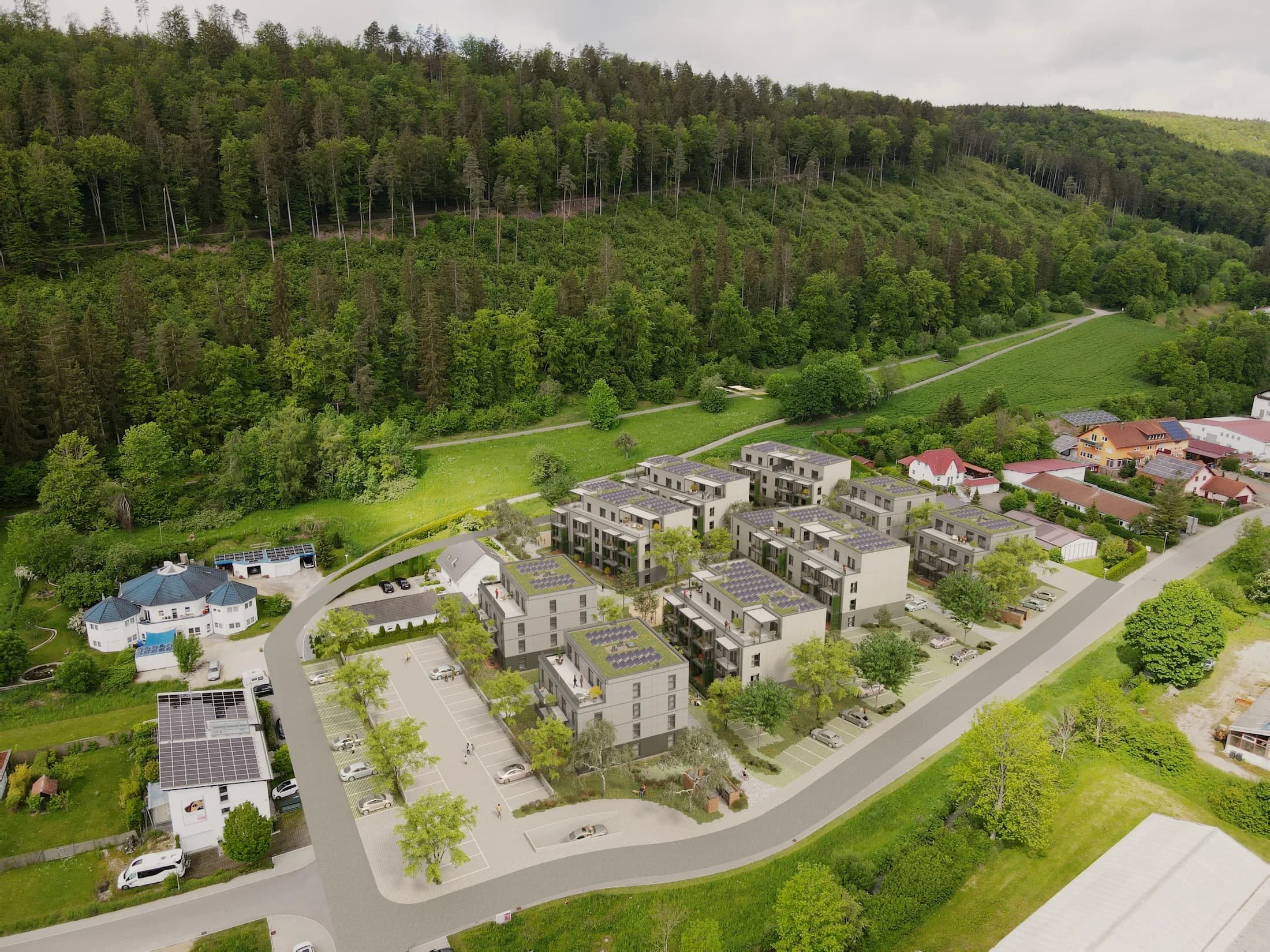
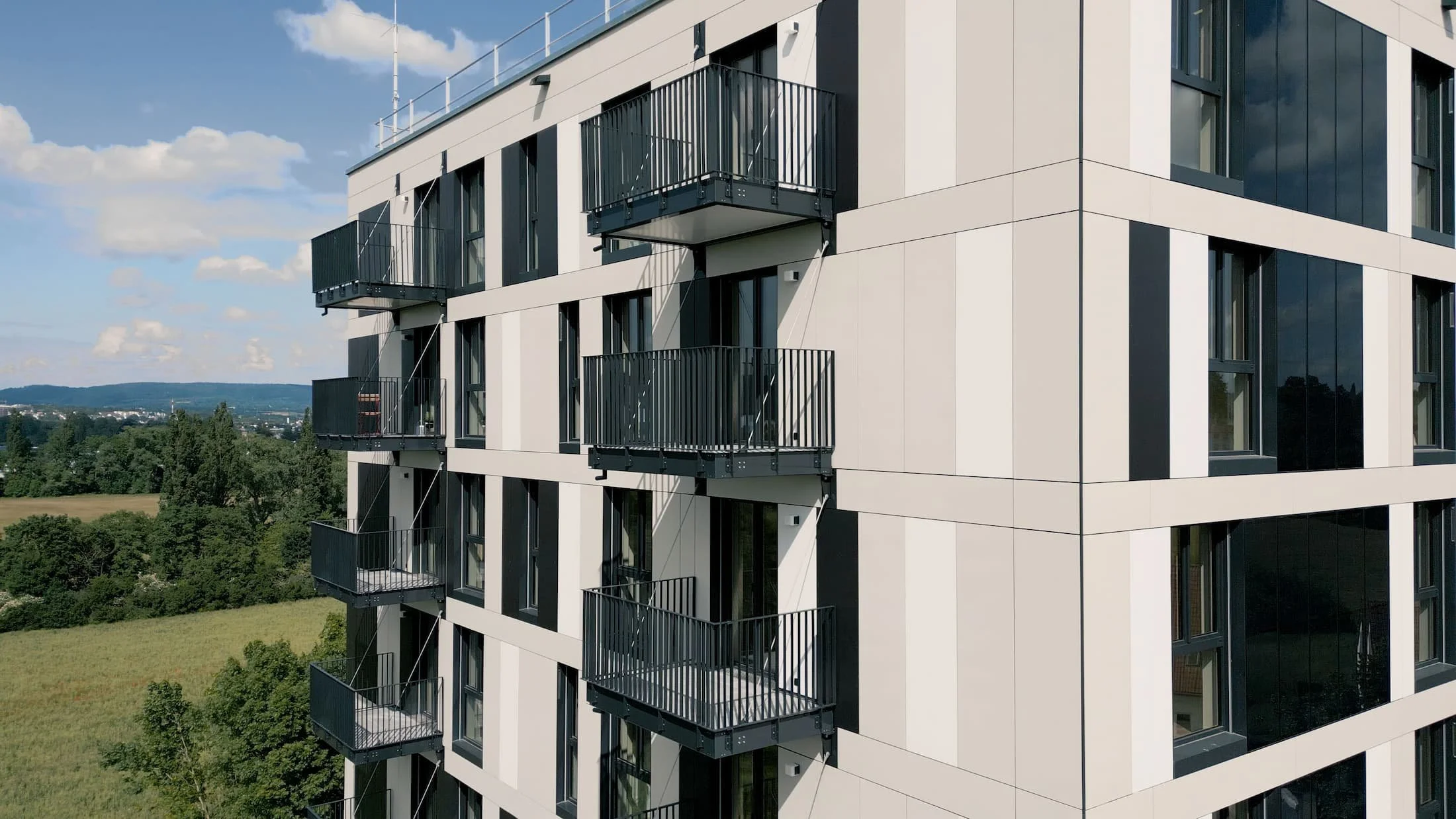
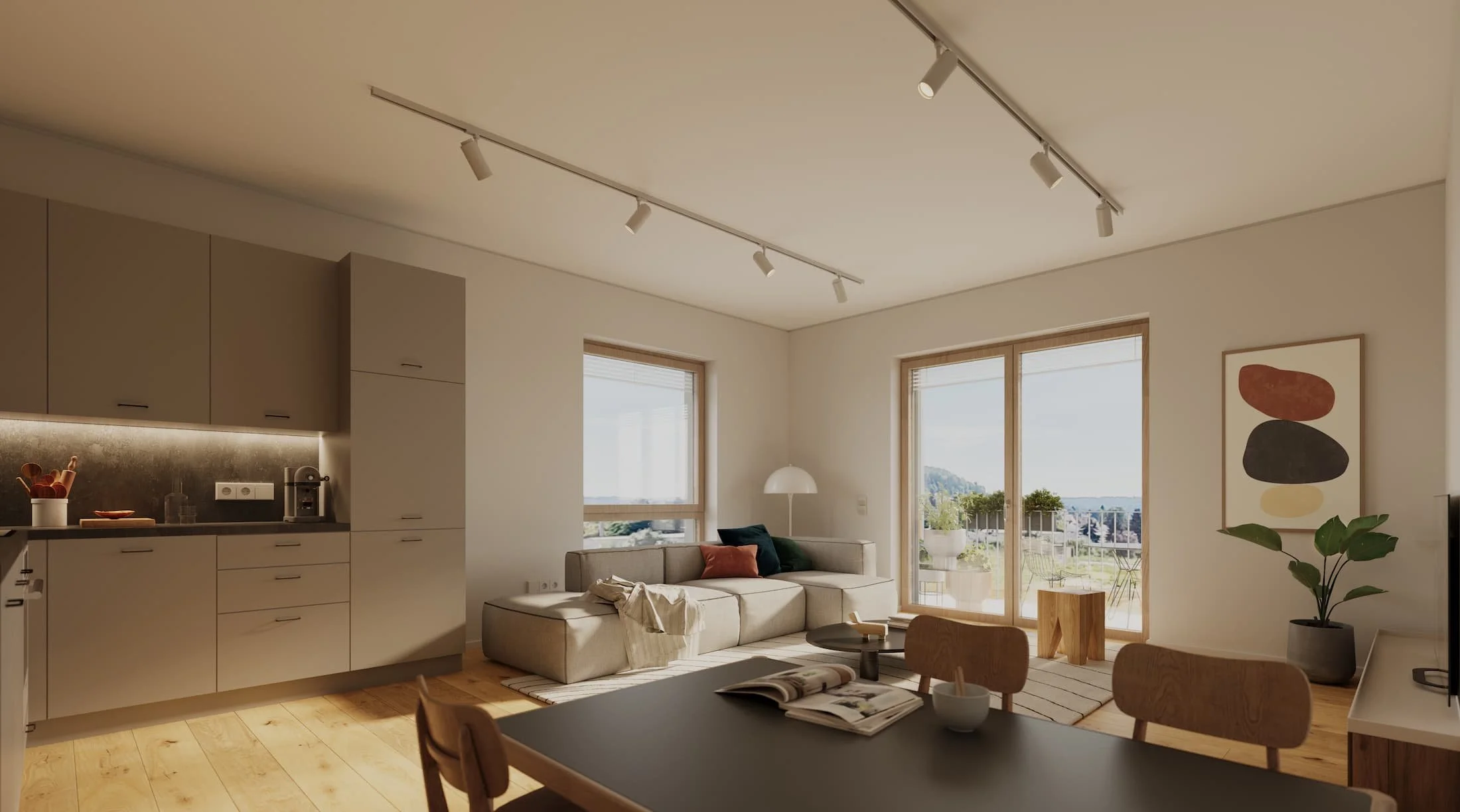
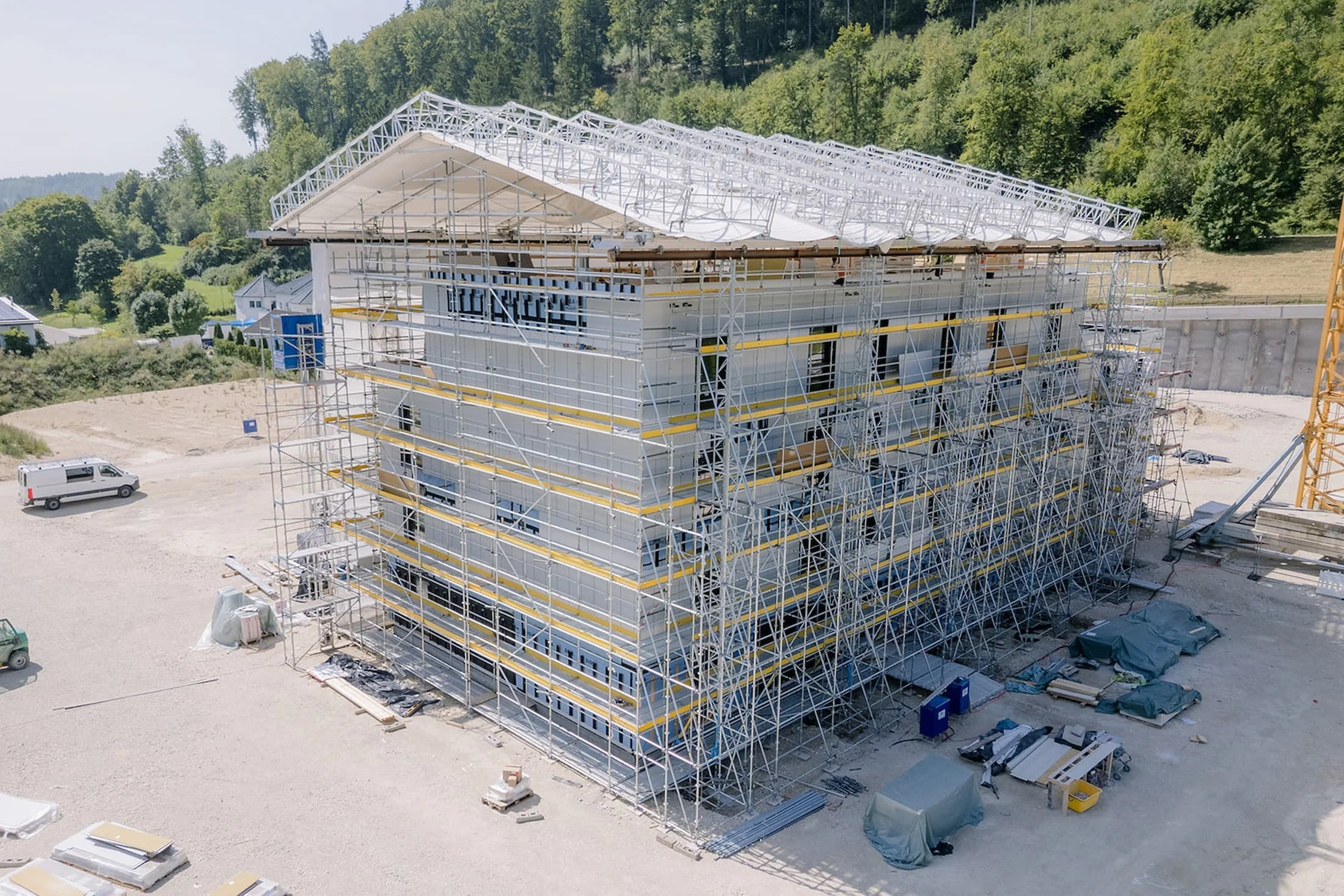
Take a look at the latest in sustainable prefab housing, AI and automation in Europe in this interview with Iain Rowe of GROPYUS.
As a freelance writer/strategist, I share complex concepts, ideas and insights along with stories from the extraordinary people behind them. If you’re interested in working together, feel free to contact me.
