
Can AI help in Bangladesh’s busiest hospitals and beyond?
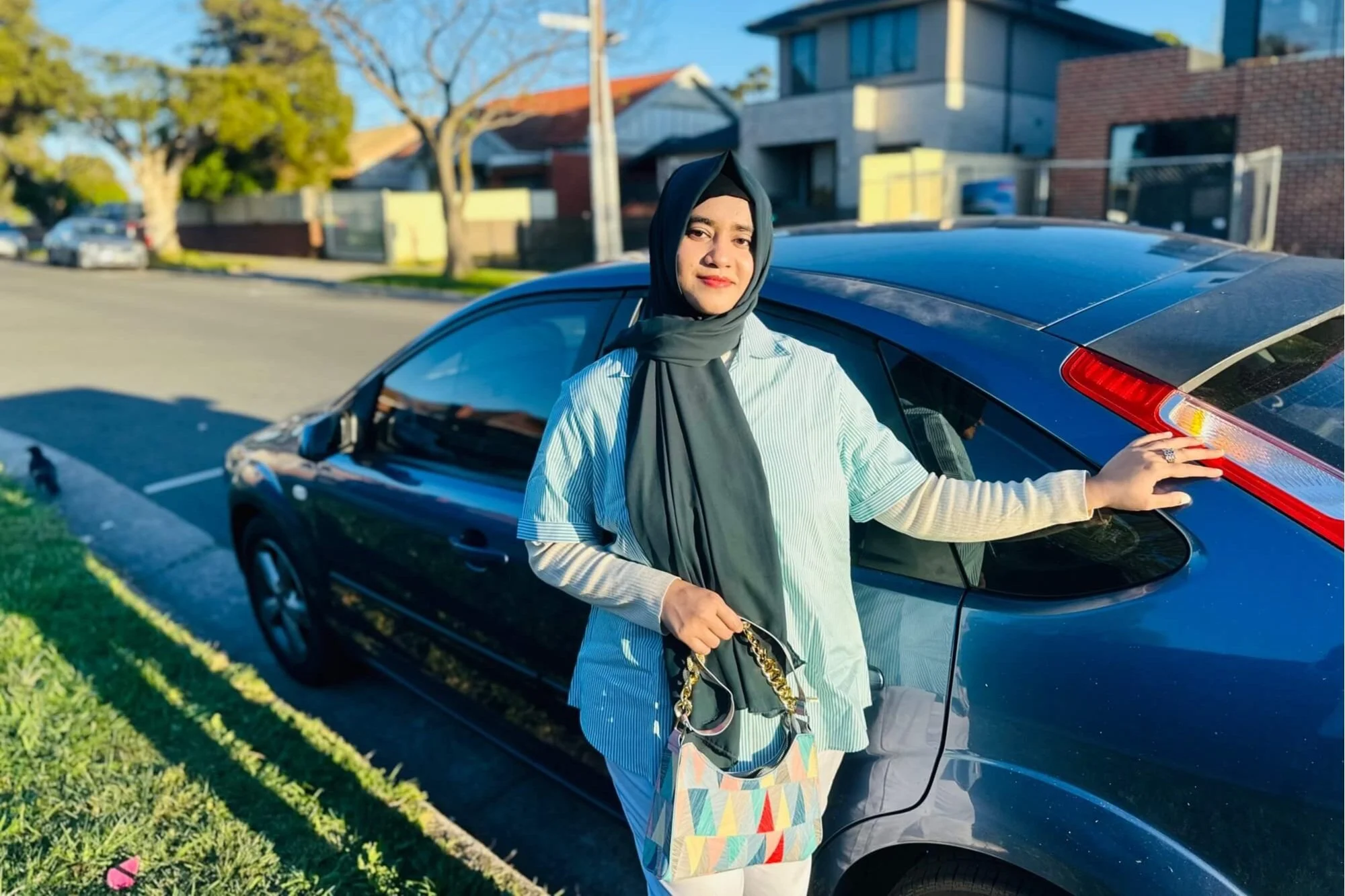
Doctor, researcher, public health advocate, community outreach worker, content creator and student support officer… Dr Alatun Noor Moon finds no shortage of ways to help communities both here in Australia and back home in Bangladesh.
Dr Alatun Noor Moon is a force of nature. As a young girl, she closely observed the inequity and inadequacy of healthcare in her father's village in rural Bangladesh. Deciding she needed to remedy this, Alatun vowed to become a doctor. After years of study and tireless work on the wards of busy Dhaka hospitals where up to 1,000+ patients present daily, she returned to the village as a doctor, community outreach worker and content creator – fulfilling her childhood ambition to help family and friends access clinical care, navigate support services, and steer clear of medical misinformation.
Now furthering her studies in global public health in Australia, Alatun continues to care for people in very different corners of the globe through her work in research, advocacy and student support. Here, she shares her thoughts on the potential promise and pitfalls AI presents to health workers in low and middle-income countries, and to students of public health wherever they may be.
Shauna: Could you share a little of your journey so far Alatun – why did you choose to study medicine and what brought you here to Australia?
Alatun: Why I chose to study medicine? Well that’s an interesting story. I grew up in Dhaka, the capital of Bangladesh, but family often visited my father's village which was about 200 kms away. As a young girl, I saw a lot of people suffering there. They didn’t go to medical doctors when they were sick. They asked religious leaders or what you might call Ayurvedic doctors for help. I saw that no one understood the concept of consulting a medical doctor for their physical or mental health problems, and that’s actually inspired me to think that if I studied medicine, I could let people know how and where they could get the help they really needed.
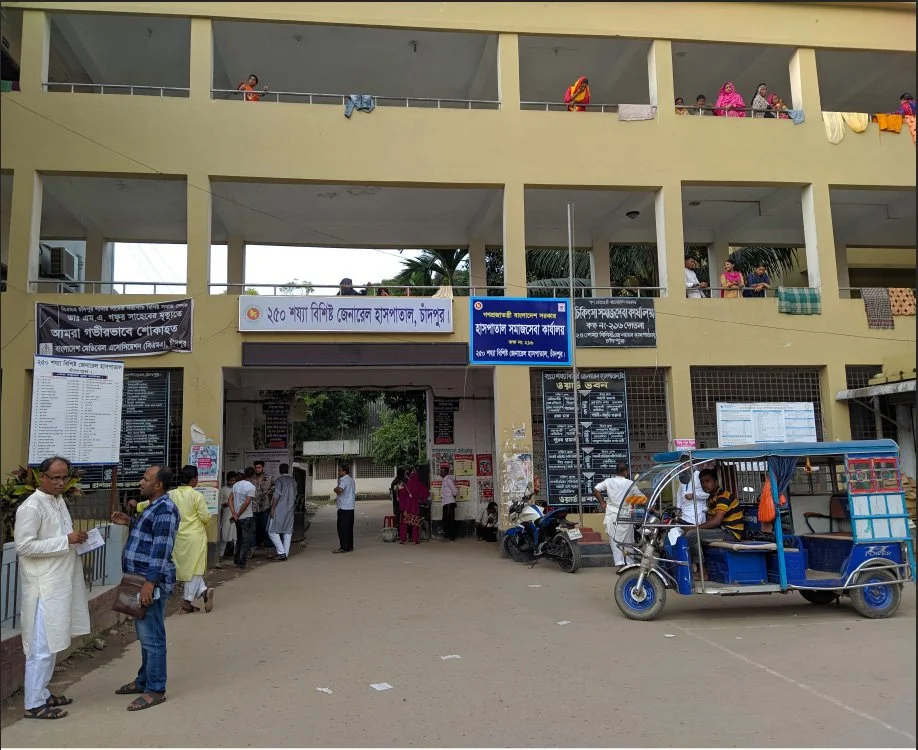
Alatun worked here at the Chandpur Medical College and Hospital in Chandpur District, Bangladesh – more than 200km from her family home in the capital city of Dhaka.
The thing is that when people from the village know you, they trust you. So they saw me growing up and visiting them from time to time. When I really became a doctor, I returned to see them again and they took my talks about healthcare seriously. They considered this new idea of going to see a doctor, and that made a real difference. Many people from the village started going to hospitals for essential treatment when they had physical and mental health problems. And over the last 20 years the government has really improved facilities for rural people as well, so that has helped a lot. It has been really great to see this transition. That was my inspiration to become a doctor.
Shauna: As a student and young doctor, you cared for patients in rural and urban areas of Bangladesh. How did you find it and what were your working conditions like?
Alatun: It was really challenging. As an intern, I worked at a big government hospital in Dhaka that treated all sorts of patients, educated and illiterate, urban and rural. We did rotations with our teachers, and then worked alone at night going from bed to bed talking with each person to find out what was wrong and which medicine to give them. Time was limited because we had 500 beds in our hospital, and a few of us had to check every bed daily.
There was also a separate outdoor area with more than 1,000 patients presenting every day. Sometimes people were dying in front of our eyes. We would get summaries from different doctors about patients who were critical, so we could plan strategically. But still, it's difficult, because to see 100 patients within the daytime is a lot. And for example, you might have five X-ray machines, but 1,000 people are coming in every day so an X-ray will take at least six hours.
The other thing is that in my home country, people begin by narrating their entire life story. As a doctor, it’s crucial to listen carefully, extract the relevant symptoms from that story, and make an accurate diagnosis. That ability to filter information from storytelling is both a skill and a challenge.
Shauna: Over 1,500 patients a day with how many doctors working what kinds of shifts?
Alatun: No more than 20 doctors with shifts of between 12 and 24 hours. Nurses were there too, but in Bangladesh, people always want to talk directly to the doctor. Here in Australia, everyone works as a team, with nurses and other healthcare professionals taking histories, giving medication, and managing simpler cases, which reduces the workload for doctors. But in our culture the doctor has become like the second God, which makes our position difficult. Even though medications were free in our hospital, patients still wanted to tell their life story to a doctor before taking medicine–even for something simple like an antihistamine.
In my country, doctors only have one day off on the weekend and must sacrifice two weekends a month as well. So, you only really get two days off a month. Even then you still get calls from patients, who manage to find your number. So, on some weekends I'm not at the hospital but I'm getting maybe 20 phone calls. ‘Hey, doctor, I'm having this problem.’ So, it's difficult to set boundaries. Our people in Bangladesh are cordial and they expect doctors to hear everything – but they don’t understand our workload. We are going through that every day. There’s definitely no time for exercise, or eating well or ‘me time’.
Shauna: There’s much talk about the theoretical promise of AI to help alleviate waiting times and improve healthcare in low and middle income countries around the world. Can you imagine it changing the hospitals you worked in on any practical level any time soon? Is it likely to address or exacerbate existing inequities?
Alatun: I think AI does hold great potential to transform healthcare, particularly in developing countries where resource constraints and long waiting times are major challenges. In theory, AI could help hospitals like the one I worked at by improving diagnostic accuracy, streamlining administrative processes, and improving patient management. For example, AI tools could assist in triaging patients, automate medical record-keeping, and even providing clinical decision support to doctors facing high patient loads. This could really reduce delays in diagnosis and treatment.
But in practical terms, widespread AI adoption in these settings definitely faces significant barriers. Many hospitals struggle with basic infrastructure, including reliable electricity, internet access, and adequately trained personnel. Without addressing these foundational gaps, AI implementation would remain limited to pilot projects rather than systemic change.
When it comes to equity, AI has the potential to both address and exacerbate disparities. On one hand, it could expand access to healthcare by enabling telemedicine, AI-assisted diagnostics, and remote patient monitoring in underserved areas. But on the other, if AI-driven healthcare solutions are concentrated in well-funded urban hospitals while rural and low-income communities remain excluded, the digital divide could widen existing inequities. Additionally, reliance on AI for medical decision-making raises ethical concerns about algorithmic bias and the risk of reinforcing disparities in healthcare access and outcomes.
Funding is another big consideration because it plays such a crucial role in healthcare transformation. Global funding bodies like USAID have historically supported public health initiatives in many developing nations, including my home country. But as we’ve just seen, the sudden withdrawal of USAID funding has left thousands of public health workers unemployed and disrupted essential health programs. Without stable financial support, even the most promising AI advancements may not reach the communities that need them the most. Many seniors I worked for are unemployed now and are looking for jobs all of a sudden now. So that's really upsetting.
Overall, while AI could revolutionise healthcare in the long run, these practical challenges and systemic inequities have to be addressed first to ensure its benefits are distributed fairly – rather than deepening existing problems and widening gaps. With the right resources, AI has so much potential overall in medicine – especially in improving diagnostic capabilities and assisting with complex surgeries that require greater precision and minimal invasiveness. But even so, it should never replace the human touch in healthcare altogether. A doctor's knowledge, experience, and, most importantly, empathy during face-to-face interactions are irreplaceable. So we need to be mindful not to become overly reliant on AI for every aspect of medical practice.
Shauna: You have many first-hand experiences of just how effective practical public health initiatives and field work can be, having worked in both research and community outreach. How and why did you move from clinical care into public health and advocacy?
Alatun: I had an incredible professor who introduced me to the beauty of public health in my third year of medical school. He explained how preventing disease at the community level reduces hospital admissions, making healthcare more sustainable. Before COVID, public health was a relatively new concept in my country, and very few doctors were interested in it. But when my professor showed us slides of public health initiatives in Australia, the USA, and Europe, I became deeply intrigued. He mentored me in research methodologies, literature reviews, and primary research, eventually offering me a part-time role in the field.
One of our key projects was assessing handwashing awareness in rural areas. A social worker and I visited local schools and homes to collect data, and were shocked to find that many people didn’t fully understand the importance of handwashing to prevent infectious diseases. Around the same time, I took on a role as a public health officer in the city council and launched a handwashing campaign in schools and hospitals. We designed and distributed educational posters throughout the region, and successfully secured government funding for free soap supplies for six months. The impact was remarkable—within that period, infectious diseases decreased by 20 to 30 percent.
So that experience was transformative for me. It reinforced the power of public health interventions and inspired me to pursue further studies in the field, ultimately leading me here to Australia.
Shauna: You were only 24 when you arrived here, how did you adjust to this totally new world?
Alatun: Before this journey, I’d always relied on my parents' support, so moving to a different country and managing things like money and accommodation on my own was a completely new experience. I was quite young and unfamiliar with how to navigate life independently, but my passion for public health drove me to take this step.
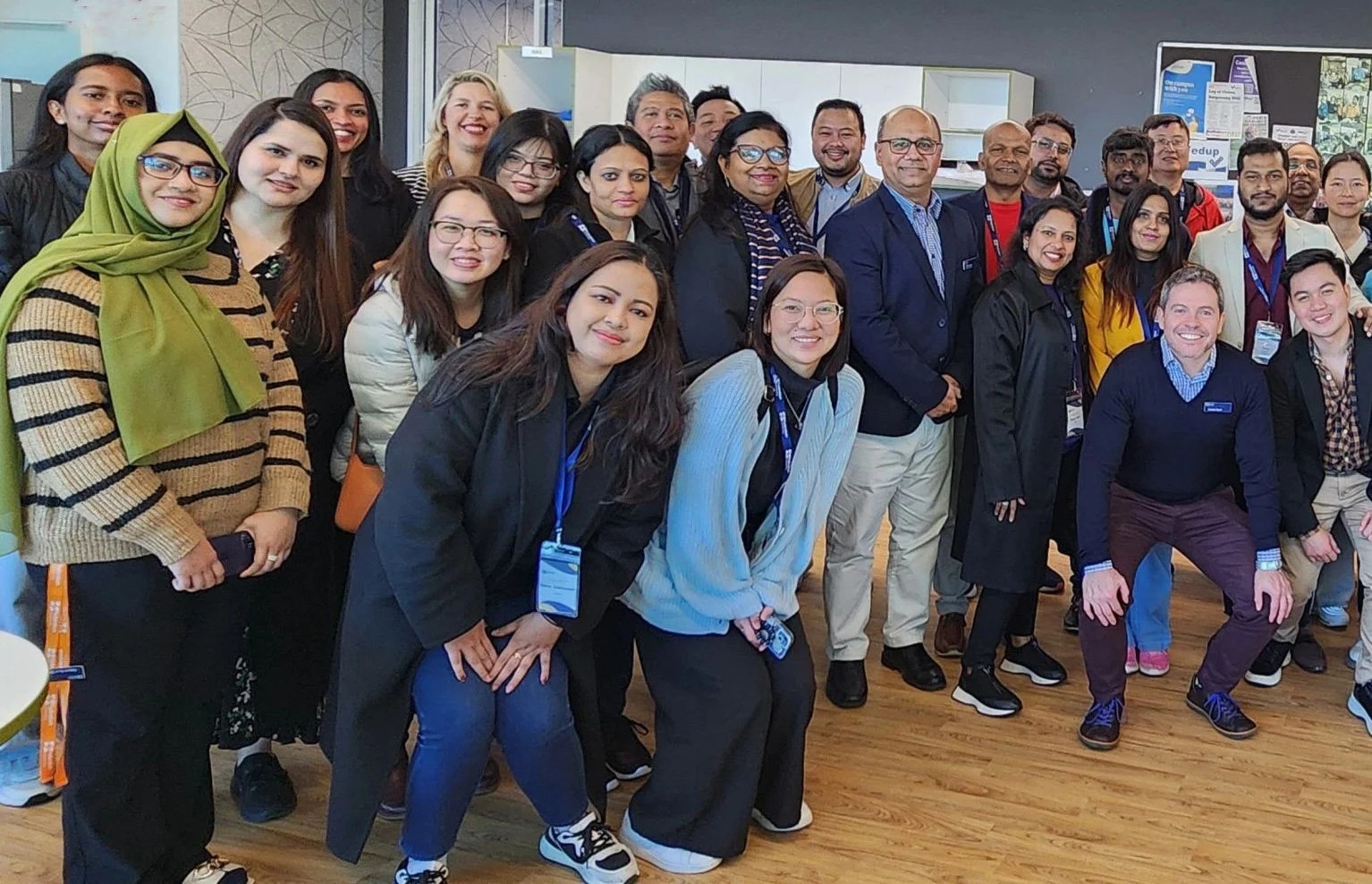
Alatun (first from the left in a stripey jumper) with current colleagues, friends and fellow students at Federation University's Berwick Campus.
At first, I didn’t know anyone here, but I was fortunate to meet many wonderful and kind-hearted friends who supported me along the way. As a Muslim, one of the initial challenges I faced was finding halal food options, but with the help of some senior students, I was able to adjust. Another major change was adapting to the academic and technological differences. In Bangladesh, everything revolved around books—data collection was done using pen and paper before being transferred to computers. Here, everything is digital, so I had to learn to work entirely on a laptop. It was a big shift, but mastering these new skills has been incredibly rewarding.
Shauna: Have you started using AI tools in your research, community outreach and educational content creation work?
Alatun: Yes, I’ve found AI has become an incredibly useful tool for gathering and organising information. When I’m conducting research, manually searching for data can be so time-consuming, especially when you need to review full research papers. AI can now provide quick summaries, helping to streamline the process. For example, I did my PhD thesis on intimate partner violence among migrant populations here in Australia and began by using AI to conduct an initial literature review. I did always cross-check the AI-generated information with peer-reviewed journals and articles to ensure accuracy, but overall this approach saved so much time and helped me start with well-organised references and insights.
Beyond research, you can see how the rise of social media and now AI are reshaping how younger generations process information. With everything being so instant and easily consumable, attention spans are shrinking. I find this is concerning, particularly for fields like research and community outreach, which require patience, years of hard work, and dedication. True progress doesn’t come from chasing quick fixes—it comes from sustained effort. You still need to put in that time and effort and future generations will still need to be able to do that. But the effects of short attention spans are obvious already. There are so many well-researched and informative videos available, but people often aren’t engaging with them – especially if they’re more than a few minutes long. Instead, they prefer 15-second reels with a twist, as these deliver a quick dopamine hit.
In my community outreach work, I’ve still found making videos is a powerful tool to convey key messages. I knew my father’s village was made up of really fun-loving and easy-going people who love stories, so I used storytelling and videos to encourage and help convince them to access the right medical advice and services. I asked volunteers to act out role plays and made dramatic videos in a cinematic style, so that people could see a character with this or that problem who visits a doctor to talk and get advice and treatment. People liked this a lot. And another positive is that the rise of AI has made content creation significantly faster—and what once took me five or six days to create can now be done in just a couple of hours. This means I can edit multiple videos quickly and share them more widely.
Shauna: You also somehow find the time now to help people learn and study in a real-world library. Do you find it surprising that so many students are still drawn to libraries despite living so much of their academic and social lives online?
Alatun: I truly love my work at the library—especially the sense of community, the smell of books, the quiet space where people immerse themselves in reading and the opportunity to share knowledge. I’ve often been told that I explain things well, and I believe that even a single word of encouragement can shape someone’s thought process in a positive way.
On my first orientation day as a student at Federation University, I visited the library and it immediately struck me as a place where I wanted to work and help students. That thought stayed with me, and eventually, I joined the library team as an assistant, where I’ve been working for the past few years.
I’ve noticed that many students still prefer physical books. Almost every book at Federation University has an online copy, yet students continue to visit the library—not just for books, but for the supportive environment and essential services like assignment help, writing assistance and laptop loans. These resources make the library an invaluable space. Because of these facilities and the irreplaceable experience of holding a physical book, I believe libraries will always have a role in education.
And for students now, I think AI itself isn’t inherently good or bad—it all comes down to the intention behind its use. It can be a tool for learning and refining ideas, or it can be misused to breach academic integrity. The key is guiding younger generations to use it responsibly, ensuring that technology enhances education rather than undermining it.
Shauna: Do you think all this extraordinary work you do across research, community outreach, medicine and education will remain human-centred, or will robots be taking up these jobs in the future?
Alatun: Robots will always continue to advance—perhaps even becoming human-like in some aspects—but one thing they can’t possess is genuine emotion. When you speak with a person and listen to their story, there’s a natural emotional connection that machines simply cannot replicate. This connection is essential in so many professions.
For tasks that involve calculations, data processing, or editing, where efficiency and precision matter most, AI will be well suited. But for roles that require direct human interaction—such as patient care, community outreach, or behaviour change advocacy—human intuition and emotional intelligence are irreplaceable. In my all my work, convincing people to adopt healthier habits has required more than just presenting information. It involved understanding their fears, motivations, and cultural context—something AI cannot fully grasp.
When we turn to tools like ChatGPT or Gemini for answers, they generate responses based on existing internet data, often producing similar outputs. While that’s valuable for accessing information, true innovation and meaningful ideas stem from human creativity and interpersonal connections. AI can assist, but it cannot replace the uniquely human ability to inspire, empathise, and connect on a deeper level.
Shauna: So if you were to sum up your thoughts about AI and how you think it will affect humanity in the future in just one word, what would it be and why?
Alatun: I would say responsibility. Because the impact of AI in healthcare ultimately comes down to how it’s distributed, implemented, and governed by those in power. Whether that’s at a national level, or within communities or in hospitals, responsible decision-making will determine whether AI bridges or deepens healthcare inequities.
Ultimately, AI’s role in healthcare depends on how we, as decision-makers, policymakers, and healthcare professionals, choose to implement it. If used responsibly, yes it could be a transformative force. But if it’s mismanaged, it will widen and worsen existing healthcare disparities.
The real challenge is not AI itself but our collective commitment to ensuring its ethical and equitable use. It’s the intention behind its use that’s most important.
* This article is based on a conversation I had with Alatun on Monday 17 February. It has been edited for length and clarity.
I’m a freelance writer/strategist who shares complex concepts, ideas and insights along with stories from the extraordinary people behind them. If you’d like to work together, contact me.
